
NFPA 25, Standard for the Inspection, Testing, and Maintenance of Water-Based Fire Protection Systems, establishes the minimum requirements to ensure that fire protection systems remain operational and effective over time. The standard is performance-based in its intent, requiring ongoing inspection, testing, and maintenance (ITM) to verify that system components function as designed.
A critical point emphasized within NFPA 25 is that the responsibility for compliance rests with the building owner or designated representative. The owner is responsible for ensuring that required ITM activities are performed, deficiencies are corrected, and records are maintained (NFPA 25, 2023, §4.1.1; §4.3). Contractors and inspectors perform the work, but compliance accountability remains with the owner.
NFPA 25 also requires that systems be maintained in accordance with the currently adopted edition of the standard, regardless of the system’s installation date (NFPA 25, 2023, §4.1.5). This reinforces that system reliability is evaluated based on current performance, not original installation conditions.
The standard further requires that all system components be maintained in an operable condition and free of physical damage, corrosion, and obstruction (NFPA 25, 2023, §4.1.1; §4.1.4). This requirement applies broadly to valves, trim, and auxiliary devices that directly or indirectly affect system performance.
Main drain testing is one example of a required functional test used to evaluate system conditions over time. NFPA 25 requires that tests be conducted annually and results compared with previous records to identify changes in water supply performance (NFPA 25, 2023, §13.2.5). Consistency in test methods and conditions is critical to obtaining meaningful data for comparison.
Devices used to simulate system operation, such as inspector’s test connections, are also required to be operated to verify proper system response, including the three-year full flow trip test on dry and preaction systems.
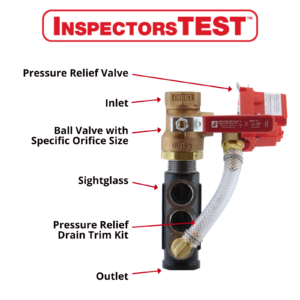 These tests must replicate actual system conditions to confirm that detection and notification components function as intended.
NFPA 25 also addresses conditions that can impair system performance over time, including corrosion and obstruction. Where foreign material or internal conditions are suspected of restricting system performance, the standard requires investigation and corrective action (NFPA 25, 2023, §14.2.1). This includes evaluation of system components that may contribute to internal degradation.
Trapped air in wet pipe systems is a recognized contributor to internal corrosion, which can lead to obstruction and reduced system reliability. While NFPA 25 does not prescribe specific design solutions for air removal, it does require that systems be maintained in a condition that prevents impairment from corrosion and obstruction (NFPA 25, 2023, §4.1.1; §4.1.4; §14.2.1).
Automatic air vents, when installed, function as system components that support this objective by removing trapped air. As with any component that can affect system performance, they fall under NFPA 25’s general requirement to be inspected, maintained, and verified to be in operating condition (NFPA 25, 2023, §4.1.1; §4.3). AGF automatic air vents incorporate an internal strainer to protect the vent mechanism from debris. In accordance with NFPA 25’s requirement to maintain components free of obstruction, strainers and similar elements must be kept clear to ensure proper operation. If debris accumulation impairs function, cleaning or maintenance is required to restore performance (NFPA 25, 2023, §4.1.1; §14.2.1). NFPA 25 requires an annual visual inspection of air vents and, every 5 years, flushing of strainers.
NFPA 25 consistently reinforces that system condition must be verified, not assumed. Inspection and testing are intended to confirm that installed components are performing as expected, particularly when performance cannot be confirmed through visual inspection alone.
The AGF 7905 Validator test kit provides a method to functionally verify the operation of installed automatic air vents without removal from the system.
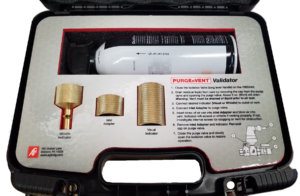
By enabling field verification of vent operation, it supports documentation of component conditions and helps identify impairments before they contribute to corrosion or obstruction-related deficiencies.
The upcoming 2026 edition of NFPA 25 continues this progression toward increased accountability and component-level verification. Updates include expanded inspection and testing expectations for specific devices, additional focus on corrosion and internal system conditions, and clearer delineation of responsibilities between system owners and ITM service providers. The standard also introduces new considerations related to aging sprinkler performance, freezing conditions within systems, and the identification and management of inactive or abandoned components. Collectively, these changes reinforce NFPA 25’s core principle that system condition must be verified and documented, not assumed.
NFPA 25 is fundamentally a standard of accountability. It requires that systems be inspected, tested, and maintained in a manner that produces verifiable, documented evidence of performance. Components that influence corrosion, obstruction, or system response must be evaluated within that framework. By supporting consistent testing, accessible maintenance, and functional verification, AGF products assist building owners and their representatives in meeting the ongoing performance requirements established by NFPA 25.