
Preassembled fire sprinkler riser assemblies can reduce field labor, simplify installation, conserve mechanical room space, and create a more consistent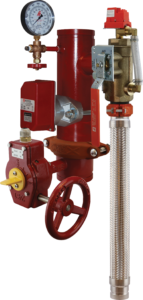 layout for inspection, testing, and maintenance. By combining multiple sprinkler system components into a factory-assembled, tested unit, contractors can reduce the piping, fittings, and assembly required in the field. AGF Manufacturing’s
RiserPACK® assemblies integrate key fire sprinkler system components into compact configurations designed for NFPA 13, NFPA 13R, and NFPA 13D applications.
Key Takeaways
Preassembled fire sprinkler riser assemblies can:
-
-
- Reduce field fabrication and installation time
- Reduce the number of field connections and potential leak points
- Create more compact and consistent sprinkler system layouts
- Simplify access for inspection, testing, and maintenance
- Integrate testing, draining, pressure monitoring, and other required functions
- Reduce the number of individual components contractors need to source and assemble
-
Continue reading Reduce Installation Time and Labor with Preassembled Riser Manifolds →
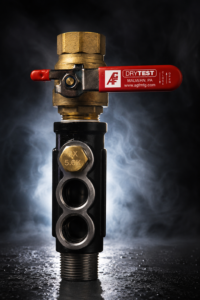 The DRYTEST Model 5600 combines the test connection valve and orifice manifold into a single, purpose-built assembly. By replacing a traditional arrangement of multiple components and field-installed connections, DRYTEST can help contractors shorten installation time, reduce potential leak points, and create a cleaner system layout. It also provides ITM teams with a convenient, accessible point for conducting required trip tests.
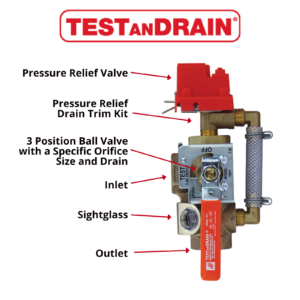 operation, support draining procedures, and help confirm that water supply performance has not degraded over time.
 optional. It is a requirement that directly impacts project timelines, approvals, and risk. But understanding the rules is one thing. Meeting them in the field is another.
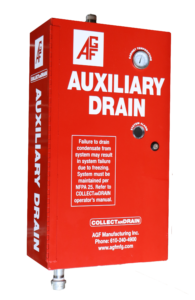 It is February. A dry fire sprinkler system’s auxiliary drain sits quietly in a loading dock. Overnight temperatures drop, water in the drum drip freezes, and the ice cracks the lower ball valve. By morning, the system has tripped, and water discharges onto the floor that is now frozen. The building is now dealing with a flooded and icy loading dock, a disabled fire sprinkler system, and possible business interuptions but this did not need to happen.