
Fire sprinkler systems are designed to protect lives and property when seconds matter. But even the best designed system depends on regular inspection, testing, and maintenance to remain ready for service.
That is where NFPA 25 comes in.
NFPA 25, Standard for the Inspection, Testing, and Maintenance of Water-Based Fire Protection Systems, establishes the baseline requirements for maintaining water-based fire protection systems after installation. It provides guidance for inspecting, testing, and maintaining systems and components so they continue to operate as intended.
For contractors, inspectors, facility teams, and building owners, NFPA 25 is more than a checklist. It is an ongoing service framework that helps identify issues before they become failures and helps owners meet applicable code, inspection, and documentation expectations. Most importantly, it helps ensure fire protection systems are ready when needed.
AGF products are commonly used in areas of a sprinkler system that require regular inspection, testing, and maintenance. Understanding those requirements helps contractors service systems more effectively and helps owners maintain safer, more compliant buildings.
Test and Drain Requirements
As the name suggests, TESTanDRAIN and Inspector’sTEST valves play an important role in confirming system readiness. They are used to verify waterflow alarm 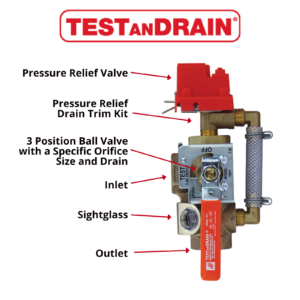 operation, support draining procedures, and help confirm that water supply performance has not degraded over time.
Main drain tests should be performed at the frequency required for the system arrangement and water supply configuration. The test valve should be in an accessible location, downstream of the waterflow alarm, and the drain should be discharged to a location that will not cause damage.
During testing, service personnel should document both static and residual pressure readings and compare them with prior records to help identify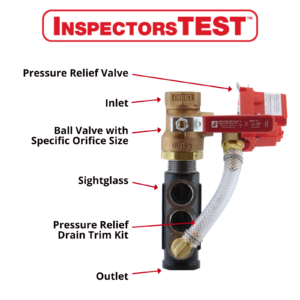 potential degradation in water supply performance.
For contractors and service teams, the comparison is what matters most. A single pressure reading provides a snapshot; a history of readings reveals the condition of the system’s water supply over time.
AGF valves are designed to support inspector’s test and drain functions in a compact assembly, making required testing and draining procedures easier to perform and document.
Pressure Relief Valve Inspection
Pressure relief valves help protect sprinkler systems from excessive pressure conditions. NFPA 25 requires regular inspection of these valves to confirm they remain in proper condition.
Service personnel should also check for signs of damage, blockage, discharge, corrosion, tampering, or improper field adjustment. Factory set relief valves should not be adjusted in the field unless specifically permitted by the manufacturer and applicable standards.
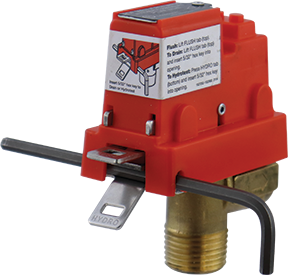
AGF pressure relief valves are factory set in accordance with FM requirements and designed for use in fire sprinkler systems. They feature a flush tab that, when lifted, helps remove debris that may be trapped in the valve by directing it out through the drain line. They also include a lock tab that isolates the valve from the system during required hydrostatic testing. When servicing any relief valve, always follow the applicable listing and manufacturer instructions.
Pressure Gauge Inspection and Testing
Pressure gauges are small components, but they play a major role in system inspection and documentation. They help verify water supply pressure, system pressure, and pressure changes during testing.
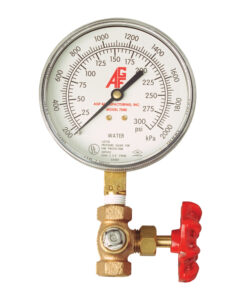
Pressure gauges must be inspected at the required frequency for the system, which may be monthly or quarterly, depending on the facility type. Gauges should be replaced five years after installation or tested every five years by comparison with a calibrated gauge. Gauges found to be inaccurate should be recalibrated or replaced.
Service teams should look for gauges that are damaged, missing, unreadable, stuck, corroded, or showing abnormal readings. A faulty gauge can affect the reliability of inspection records and make it harder to identify changes in system performance.
AGF pressure gauges and gauge accessories help support accurate system monitoring and documentation during routine inspection, testing, and maintenance.
Floor Control Assembly Inspection, Testing, and Maintenance
Floor control assemblies are critical points in many fire sprinkler systems. These assemblies typically include a control valve, check valve, pressure gauge, and waterflow alarm connection. Because they control and monitor sections of a
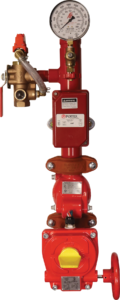
system, they must remain accessible, identifiable, and operational.
NFPA 25 requires regular inspection, testing, and maintenance of floor control valve assemblies to help ensure water-based fire protection systems operate as intended. Key requirements may include monthly visual inspections for accessibility and open-valve position, annual valve operation, and proper signage.
During inspections, service personnel should confirm that valves are accessible and not blocked by boxes or other stored items, in the proper position, clearly identified, and free of visible damage. Gauges should be readable and in good condition. Signs should be present and accurate. Any obstruction, missing identification, closed valve, or damaged component should be documented and addressed.
AGF RiserPACK assemblies provide preassembled floor control solutions for NFPA 13D, NFPA 13R, and NFPA 13 applications. Their consistent configuration can help contractors install cleaner assemblies and help service teams identify, inspect, and maintain the system more efficiently.
Auxiliary Drain Maintenance
Auxiliary drains are especially important in dry pipe sprinkler systems and other areas subject to freezing. Condensation collects in trapped sections of piping. If that water is not removed, it can freeze, expand, damage components, cause false trips, and lead to costly water damage.
NFPA 25 Section 13.4.5.3.3 requires auxiliary drains in dry pipe sprinkler systems to be drained after each system operation, near the beginning of the cold season
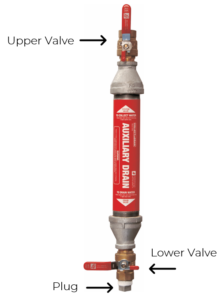
before freezing conditions occur, and thereafter as needed. During winter, drains in unheated areas should be checked regularly because trapped water can freeze and damage the system.
NFPA 25 also emphasizes identification and accessibility. A permanent sign should be located at the system control riser listing the number and locations of all auxiliary drains, and all drains should remain accessible for maintenance.
For service teams, auxiliary drain maintenance is one of the most practical ways to prevent avoidable damage. Draining trapped water before freezing conditions can help avoid broken piping, false system trips, water cleanup, restoration work, tenant disruption, and emergency response costs.
AGF COLLECTanDRAIN auxiliary drains are preassembled to support proper drainage and clear identification. Additional AGF auxiliary drain options are available for challenging locations, including public areas subject to vandalism, frequently collecting drains, and locations requiring monitoring or freeze protection.
Automatic Air Vent Inspection and Maintenance
Air trapped in wet fire sprinkler systems can contribute to corrosion, trapped air pockets, and maintenance challenges. Automatic air vents are used to help remove air from the system, but they still require periodic inspection and maintenance.
NFPA 25 Section 13.12 requires automatic air vents to be inspected annually from floor level to verify that they are free of physical damage and show no signs of
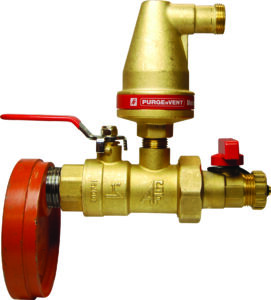
leakage. Section 13.12.1 requires strainers, filters, and screens to be removed and inspected every five years for damaged or corroded parts. Section 13.12.2 states that when strainers, filters, and screens are removed for inspection, they shall be flushed until clear or replaced.
During routine inspections, service personnel should confirm that air vents are properly oriented, free of visible damage, and not leaking. Any signs of corrosion, blockage, or failure should be documented and corrected.
AGF PURGEnVENT automatic air vents feature a purge valve that can be opened to flush the internal screen and act as a vacuum break while a system is draining, helping expedite draining procedures.
Documentation and Deficiency Management
Performing ITM work is only part of compliance. Documentation is equally important. Inspection and service records should clearly identify what was inspected or tested, when the work was performed, who performed it, what results were recorded, what deficiencies were found, and what corrective action is required.
Common enforcement and compliance issues include unqualified ITM personnel, poor documentation quality, uncorrected deficiencies, and delayed handling of impairments.
When a deficiency is identified, it should be documented, communicated to the responsible party, and corrected in accordance with the applicable standard, local requirements, and AHJ expectations. Impairments should receive immediate attention because they can affect the ability of the system to operate during a fire.
Clear documentation protects everyone involved. It gives owners a record of system condition, helps contractors demonstrate completed work, supports AHJ review, and creates a history that can reveal trends over time.
A Practical NFPA 25 Service Mindset
NFPA 25 is not simply about checking boxes. It is about keeping fire protection systems ready. A strong ITM program should answer several basic questions.
-
-
-
- Are required inspections being performed at the correct frequency?
- Are tests being completed properly and compared with previous results?
- Are valves, gauges, drains, vents, and floor control assemblies accessible and in good condition?
- Are deficiencies documented and corrected?
- Are impairments handled immediately?
- Are the records clear enough for the owner, contractor, inspector, and AHJ to understand the condition of the system?
-
-
When those questions are answered consistently, NFPA 25 becomes more than a compliance requirement. It becomes a practical service tool for protecting people, property, and system performance.
AGF products are designed to support the inspection, testing, and maintenance work that contractors and facility teams perform every day. By making key system components easier to access, identify, test, drain, monitor, and maintain, AGF helps support safer systems and more efficient service.
For technical support, product information, or additional training resources, contact AGF Manufacturing or visit AGFMFG.com.
Disclaimer:
AGF Manufacturing is not the National Fire Protection Association, and this article is not intended to serve as a formal interpretation of NFPA 25 or any other NFPA standard. The information provided reflects AGF’s understanding and opinion of general inspection, testing, and maintenance considerations related to water-based fire protection systems and AGF products. Requirements may vary based on local codes, project specifications, and the Authority Having Jurisdiction. Always consult the applicable standard, manufacturer documentation, qualified fire protection professionals, and the local AHJ for final approval and enforcement requirements.