
Time is one of the most valuable resources on any job site. Labor is tight, schedules are compressed, and every extra fitting, connection, material search, or avoidable service adds up. Fire sprinkler contractors need products and processes that help them work efficiently without cutting corners. That is where smart product design and lean construction thinking work together.
Lean construction is not about rushing. It is about removing waste from the work. It means reducing unnecessary steps, improving planning, limiting rework, keeping materials organized, and making sure crews have what they need when they need it. In the fire sprinkler industry, that can mean fewer parts to assemble, clearer work packages, better coordination, cleaner riser rooms, faster testing, and systems that are easier to inspect and maintain over time.
AGF products are designed for the realities of the field. They are built to reduce unnecessary parts, simplify installation, support faster testing, and make systems easier to service throughout the life of the building. From test and drain valves to auxiliary drains, inspector’s tests, air vents, and preassembled solutions, AGF helps contractors save time at every stage of the system’s life.
Fewer Parts Support Leaner Installs
One of the clearest examples of AGF’s time-saving approach is the TESTanDRAIN valve. Before the original TESTanDRAIN was introduced, contractors often had to build test and drain assemblies from multiple components. That meant more fittings, more connections, more labor, more handling, and more opportunities for leaks.
From a lean construction perspective, that is waste. Extra parts create extra touches. Extra touches create extra chances for errors, delays, and rework.
The idea behind TESTanDRAIN was simple: combine essential test and drain functions into one purpose-built valve.
That simple idea changed the way contractors approached test and drain assemblies. By reducing the number of parts needed, TESTanDRAIN helped make installations cleaner, faster, and easier to service while creating a more consistent layout for testing and draining sprinkler systems.
Consistency matters. Lean construction relies on standard work, which means creating repeatable methods that crews can trust from job to job. When a test and drain assembly is simpler, cleaner, and more recognizable, it supports better standard work in the field.
For contractors, that matters. Fewer connections can mean less time spent assembling parts, fewer potential leak points, and a cleaner installation that is easier to understand when the next person walks in for ITM.
The impact of the AGF TESTanDRAIN is easy to see in the number of copycat and imported test and drain valves that have entered the market over the years. But there is still only one original. AGF introduced the original TESTanDRAIN valve, it is still made in the USA and available in more sizes, orifices, and connection options than any imposter.
Better Planning Starts with Products That Make Sense
Lean construction tools such as pull planning, the Last Planner System, and constraint management all focus on one goal: making sure work is ready before crews are expected to perform it.
In fire sprinkler work, delays often happen because information, materials, access, or approvals are not ready. A crew may be waiting on coordinated drawings, missing fittings, blocked access, ceiling changes, or unresolved inspection details. The result is lost time.
AGF products help reduce field constraints by making common system functions simpler and more predictable. When contractors can rely on purpose-built valves, preassembled drains, clearly marked components, and consistent installation details, they can plan work more confidently. Repeatable installation details are easier to coordinate with the project team. These small improvements help support better look-ahead planning, fewer surprises, and smoother workflow onsite.
Faster Commissioning and Easier Testing
Time savings do not stop once the system is installed. Testing and commissioning can also be streamlined when the right products are used from the start.
A clearly marked valve makes testing easier to identify and perform. A well-designed inspector’s test valve with pressure relief that can be isolated while installed helps streamline hydrostatic testing and speed up commissioning. An automatic air vent, consistently installed with an end cap on one of the most remote branch lines, can help meet code requirements without adding unnecessary complexity to future service.
This supports another key lean idea: quality at the source. Instead of waiting until the end of the job to discover missing components, confusing layouts, or service access problems, contractors can build quality into the design from the beginning. The result is a system that is easier to inspect, easier to maintain, and easier for the next person in the riser room to manage.
Preassembled Solutions Reduce Field Labor
Every contractor knows that time spent building assemblies in the field can slow a project down. When crews must gather parts, verify components, make multiple connections, and build the same type of assembly repeatedly, small delays can multiply across a job. That is exactly the kind of waste lean construction is designed to reduce. AGF’s preassembled solutions help reduce that burden.
RiserPACK floor control assemblies give contractors a ready-made solution designed to support NFPA 13, 13R, or 13D applications. Instead of piecing together individual components on site, contractors can install a complete assembly with the connections, sizes, and orifice options needed for the job.
This supports prefabrication, one of the most practical lean strategies in the fire sprinkler industry. The more work that can be shifted away from a crowded, changing jobsite and into a controlled assembly process, the more consistent the final installation can be.
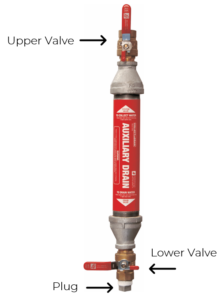
The same practical thinking applies to COLLECTanDRAIN auxiliary drains. Rather than building a drum drip from spare parts in the field, contractors can use a preassembled auxiliary drain with integrated signage to support compliance and simplify maintenance. Available options, including basic drum drips to heated cabinets with automatic draining, help engineers and contractors choose the right solution for the project. Less field assembly means fewer steps, cleaner installations, and more consistent results from job to job.
Kitting and Point of Installation Delivery
Lean construction also encourages better material flow. Crews should not spend valuable time searching for parts, sorting through boxes, or walking back and forth across the jobsite to find one missing component.
AGF products support a more organized approach to material planning. Purpose-built and preassembled products are easier to include in kits by floor, riser, zone, or work package. When a crew receives the right components together, labeled clearly, and ready for the task ahead, installation becomes more predictable.
This helps contractors move closer to the point of installation delivery. Instead of sending loose material to the site too early, moving it multiple times, and hoping the right pieces are still available when needed, contractors can stage more complete packages for specific areas of the building. That supports better workflow, less material waste, and fewer delays caused by missing or misplaced parts.
Coordinating Leaner Installs with Revit and BIM
Revit and BIM coordination are also important lean construction tools for fire sprinkler contractors. Coordinated models help project teams identify routing conflicts, confirm available space, improve prefab accuracy, and plan installations before crews arrive on site. When sprinkler components are included in the preconstruction models, contractors can reduce field surprises, avoid unnecessary rework, and create cleaner work packages for fabrication, kitting, and installation. AGF supports this process by making product models available on the downloads page of our website, giving designers, contractors, and coordination teams access to the files they need to incorporate AGF products into their project models. Better coordination upstream helps the workflow better downstream.
Cleaner Systems Support Visual Management
Visual management is another lean construction principle that applies directly to fire sprinkler systems. A well-organized installation should be easier to read, easier to inspect, and easier to service.
That matters in riser rooms, mechanical spaces, and any area where Inspectors, service technicians, facility teams, and contractors need to understand the system quickly.
AGF products help support visual management through clean layouts, clear markings, integrated signage, and recognizable product functions. When valves, drains, vents, and test points are purpose-built and easy to identify, the system communicates more clearly.
That clarity saves time. It reduces confusion during inspections, helps service technicians diagnose issues faster, and makes future maintenance more efficient.
Time Savings Continue Through Maintenance
The best time-saving products do more than make installations faster. They continue to make the system easier to service throughout its life.
Auxiliary drains, air vents, inspector’s tests, and test and drain valves all affect how quickly a technician can understand and service a system. A clean layout, clear markings, fewer unnecessary connections, and purpose-built components can reduce confusion during inspections and service calls.
AGF automatic air vents are a good example. The PURGEnVENT Model 7930ECA includes an end cap so it can be easily coupled to a new or existing system. Once installed, it continuously vents air from the system, helping reduce trapped air that can contribute to corrosion. That makes it a practical time saver during installation and a long-term maintenance advantage for the life of the system.
This is lean thinking beyond installation. It is not just about saving labor on day one. It is about reducing waste throughout the system’s service life. When systems are easier to inspect and maintain, contractors, Inspectors, facility teams, and building owners all benefit.
Built for Standardized Work in the Field
Standardized work is one of the most valuable lean tools a fire sprinkler contractor can use. When crews use consistent methods, layouts, assemblies, and installation practices, work becomes easier to train, easier to plan, and easier to repeat.
AGF products support that consistency. A contractor can standardize around proven test and drain valves, inspector’s test valves, auxiliary drains, air vents, and floor control assemblies. That makes it easier for designers, project managers, fabrication teams, foremen, fitters, Inspectors, and service technicians to work from the same playbook.
When the product is familiar, the installation is neater. When the installation is neater, testing is easier. When testing is easier, commissioning moves faster. And when the system is easier to understand, maintenance becomes more efficient.
AGF Distributors can help.
AGF distributors can also be an excellent resource for contractors looking to apply lean construction practices to fire sprinkler projects. Because distributors understand product availability, jobsite schedules, and contractor workflows, they can help support better planning before material reaches the field. The right distributor partner can assist with prefabrication strategies, organize product kits by floor, riser, zone, or work package, and coordinate just-in-time delivery so crews receive the materials they need when the area is ready for installation. That support can reduce double handling, minimize time spent searching for parts, and help contractors keep projects moving with fewer delays. When AGF products are paired with knowledgeable distribution support, lean construction becomes more than a jobsite idea. It becomes a practical way to improve material flow, reduce unnecessary steps, and give contractors more time back in the field. Find an AGF distributor in your area HERE.
Built for the Person Doing the Work
Saving time is not about rushing. It is about removing unnecessary work. It is about reducing the number of parts a contractor has to assemble. It is about making testing more straightforward. It is about helping Inspectors and service technicians understand the system faster. It is about designing products that solve real job-site problems before they become delays.
That has always been part of AGF’s approach.
AGF products are built with the contractor in mind, the person holding the wrench. They simplify installs, speed up testing, streamline commissioning, and reduce friction in long-term maintenance. This is where lean construction meets intelligent product design. Because in fire protection, performance isn’t enough.
The right product keeps the job moving.
Makes the system intuitive.
It gives contractors back valuable time.