Why a Remote Inspector’s Test Valve is Not a Good Air Vent

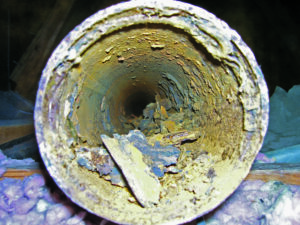
Proper air venting is essential when designing and installing a wet pipe fire sprinkler system to reduce corrosion risks and ensure system performance. While NFPA 13 allows for different methods of venting air from a sprinkler system, including a manual valve, an automatic air vent, or a remote inspector’s test valve, it is crucial to understand why a remote inspector’s test valve is not an effective air venting solution.

Continue reading Why a Remote Inspector’s Test Valve is Not a Good Air Vent →
Air Vents for Wet Fire Sprinkler Systems: Understanding NFPA 13 Requirements

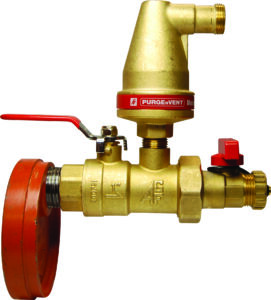
Air management is critical in wet fire sprinkler system design that utilizes Model 7930 end cap automatic air ventmetallic pipe. Trapped air can contribute to corrosion, leading to costly maintenance and potential system failure. NFPA 13 recognizes this and mandates at least a single air vent on wet pipe fire sprinkler systems, but the code allows the system designer to determine if additional vents are necessary.
8.1.5.1 NFPA 13 (2019) – “Venting from multiple points on each system shall not be required.”

The NFPA 13 Code Requirement

NFPA 13 requires at least one air vent near a high point in the system to help exhaust air. However, the code does not specify a maximum number of vents, leaving it up to designers to assess whether additional vents are needed to remove air that causes corrosion. While some manufacturers design vents with redundant air vents or drip pans as a necessity, AGF Manufacturing provides a smarter solution with its innovative automatic air vent design.

Why Choose an Automatic Air Vent?

Continue reading Air Vents for Wet Fire Sprinkler Systems: Understanding NFPA 13 Requirements →

Ensuring Corrosion Protection Beyond Routine Maintenance in Fire Sprinkler Systems

Corrosion prevention is crucial for protecting lives and property.

Corrosion poses a significant threat in fire sprinkler systems, often remaining undetected until it’s too late, leading to property damage or even loss of life during a fire event. Traditional Inspection, Testing, and Maintenance (ITM) protocols are essential but can inadvertently accelerate corrosion rates by introducing fresh oxygen into the system. Fortunately, advancements in products and strategies offer enhanced corrosion prevention and monitoring capabilities, crucial for protecting lives and property.

Vapor Pipe Shield by General Air Products
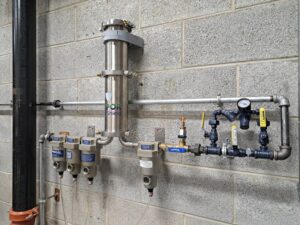
Vapor Pipe Shield by General Air Products is an inline delivery system of Vapor phase Corrosion Inhibitor (VpCI) to prevent corrosion in Dry-Pipe & Pre-Action Fire Sprinkler Systems. Image courtesy of General Air Products


Understanding the corrosion triangle

Corrosion in fire sprinkler pipes arises from a chemical reaction producing rust particles. Unlike typical plumbing systems where flowing water flushes away these particles, stagnant water in fire sprinkler systems allows rust buildup, leading to obstructions. This buildup, if present during a fire, can hinder water flow or block sprinkler heads, amplifying the severity of the situation. The corrosion triangle, comprising steel, water, and oxygen, forms the basis of this process. Fire sprinkler systems provide ideal conditions for corrosion as all three elements are present. Wet systems, filled with water and oxygen, are particularly susceptible, while dry systems, despite the absence of water, are not immune due to trapped moisture and oxygen.

Continue reading Ensuring Corrosion Protection Beyond Routine Maintenance in Fire Sprinkler Systems →

New Trends in Corrosion and Freeze Protection for Resilient Fire Sprinkler Systems

How can you prevent corrosion and freezing in fire sprinkler systems? That has long been a question central to code requirements and new product development.

Recent innovations have presented a few possible answers to that question. Air vents, self-draining auxiliary drains in heated cabinets, and flood elimination devices, can protect fire sprinkler systems against the common pitfalls of corrosion and freezing.

Continue reading New Trends in Corrosion and Freeze Protection for Resilient Fire Sprinkler Systems →

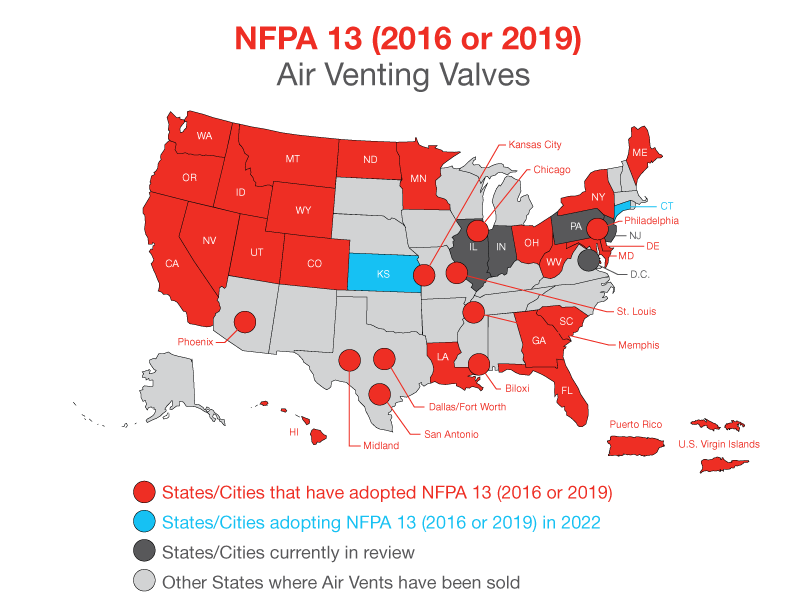
Which States Require Air Vents? NFPA 13 (2016) Adoption Map

NFPA 13 (2016) and later editions require air vents on all wet pipe fire sprinkler systems utilizing metallic pipe. Jurisdictions across the US have been adopting these editions on their own or by reference in an IBC 2018 adoption. This chart shows which states have NFPA 13 (2016) adoption (or later editions) and which states will be adopting soon.

*Please consult your AHJ to confirm local code requirements

AGF’s PURGEnVENT line of manual and automatic air vents make it simple to meet code requirements with flexible installation options. Plus, PURGEnVENT patented air vents help protect your system from corrosion by releasing trapped air.

For questions about NFPA 13 (2016) changes regarding air vents and corrosion or NFPA 13 (2016) adoption, please contact us to talk to a member of our technical staff.

AGF Announces New PURGEnVENT Model 7930ECA

Endcap Automatic Air Venting Valve for Fire Sprinkler System Installs Quickly and Continually Eliminates Air to Reduce Corrosion

AGF Manufacturing, a designer and manufacturer of specialized fire sprinkler components, announces their newest addition to the PURGEnVENT product line, the Model 7930ECA endcap automatic air venting valve assembly.

Continue reading AGF Announces New PURGEnVENT Model 7930ECA →

CORRinSITE – Reliable Corrosion Monitoring Made Simple

Corrosion is a continuous and virtually unstoppable force of nature, and it is on the rise.  Corrosion occurs when the oxygen present in air trapped within fire sprinkler systems interacts with water or moisture and the metal pipes. Virtually all commercial fire sprinkler systems are susceptible to corrosion’s damaging effects.

It often starts with pinhole leaks, builds to mineral deposits that can clog pipelines, and ends with sprinkler pipes being destroyed from the inside out.  In addition to attacking the sprinkler system, corrosion can also result in ceiling staining, water damage, mold growth, and even electrical system failure.

Corrosion monitoring is the key to addressing corrosion before it causes leaks and other damage.

Continue reading CORRinSITE – Reliable Corrosion Monitoring Made Simple →