Prepare Your Fire Sprinkler’s Auxiliary Drains for Winter

For building owners, facility managers, and fire protection contractors, preparation isn’t just a seasonal event. It continues throughout winter. A drain emptied in October can collect more water in November, December, and/or  January. A heater can fail during a weekend cold snap while the building is empty. Plan for those possibilities before the first freeze to help prevent accidental system trips, flooding, facility damage, and system impairment.
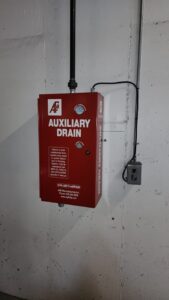
Prepare fire sprinkler systems for winter by verifying heat or freeze protection, removing accumulated water from dry and preaction system auxiliary drains, and maintaining a schedule that continues throughout cold weather. Assign trained personnel to each task and confirm that alarms and monitoring notifications reach someone who can respond.

Why can dry fire sprinkler systems freeze?

Dry fire sprinkler systems use pressurized air or nitrogen in the distribution piping during normal operation. However, condensation and water remaining after testing or system operation can collect inside the piping. Auxiliary drains, also called low point drains or drum drips, provide a way to remove water from trapped sections.

When collected water freezes, expansion can damage drains, valves, and piping. A broken auxiliary drain can release air pressure and trip the dry valve, allowing water into the system and potentially out through the break. The result can include flooding and an impairment while repairs are completed.

What should a fire sprinkler winter preparation plan include?

Continue reading Prepare Your Fire Sprinkler’s Auxiliary Drains for Winter →
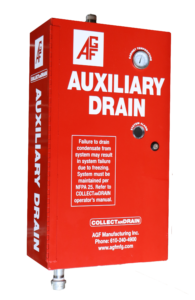
Comparing AGF’s Heated Cabinets for Drum Drip Freeze Protection

Model 5500 Heated Auxiliary DrainIt is February. A dry fire sprinkler system’s auxiliary drain sits quietly in a loading dock. Overnight temperatures drop, water in the drum drip freezes, and the ice cracks the lower ball valve. By morning, the system has tripped, and water discharges onto the floor that is now frozen. The building is now dealing with a flooded and icy loading dock, a disabled fire sprinkler system, and possible business interuptions but this did not need to happen.
In many dry and pre-action systems, the drum drip is not the most complex component, but it is often the most vulnerable. Auxiliary drains, commonly referred to as drum drips, are installed at low points to collect condensation that forms inside the piping and to drain the trapped section of piping. While this moisture accumulation is expected, improper management of condensate presents a significant risk during cold weather conditions.

Continue reading Comparing AGF’s Heated Cabinets for Drum Drip Freeze Protection →

Five Essential Steps to Prepare Your Dry Fire Sprinkler System for Winter

“An ounce of prevention is worth a pound of cure.” Benjamin Franklin

Benjamin Franklin’s timeless wisdom applies perfectly to the challenges of maintaining dry fire sprinkler systems through the harsh winter months. Every year, building owners and facility managers face frozen drains, damaged piping, system downtime, and costly repairs, all of which are preventable with the right preparation.

The key to avoiding those headaches lies in one word: prevention.

When temperatures drop, water trapped in auxiliary drains, aka low points, can freeze, expand, and crack the drain, releasing pressure from the system and tripping the dry valve. The result? Flooded spaces, impaired fire protection, and expensive emergency service calls. But with a few proactive steps and the right tools from AGF Manufacturing, facility teams can protect their systems and their budgets from winter’s worst effects.

Continue reading Five Essential Steps to Prepare Your Dry Fire Sprinkler System for Winter →

Prevent Freezing: Your Auxiliary Drains Need Drained NOW!

With cold weather coming, even southern areas that usually don’t freeze need to prepare their fire sprinkler systems. It’s important to take action now. For dry and pre-action sprinkler systems, one of the most common vulnerabilities during extreme cold is auxiliary drains. Neglecting to properly maintain and drain these components can lead to costly damage and system failure.

What Are Auxiliary Drains?

Auxiliary drains, called drum drips or low point drains, are important parts of dry and pre-action fire sprinkler systems. They collect condensation that forms inside pipes, preventing it from pooling and causing corrosion or blockages. When temperatures drop below freezing, water in the auxiliary drain can freeze. This ice can expand and may crack the drain or the system’s pipes.

Continue reading Prevent Freezing: Your Auxiliary Drains Need Drained NOW! →

Prepare your Low Point Drain for Winter

Preparing for Winter, Sprinkler System Maintenance

In freezing weather, dry and pre-action fire sprinkler systems have a major Achilles heel if improperly maintained—the auxiliary drains. Auxiliary drains, also referred to as low point drains or drum drips, are required on dry or pre-action fire sprinkler systems to collect condensation that forms in the pipes.

When improperly maintained, low point drains break and can cause major facility flooding. The cost to repair and reset the fire sprinkler system itself is negligible compared to the cost of water damage mitigation, potentially lost inventory, tenant interruption, increased liability, and increased insurance premiums.

Luckily, understanding attentive maintenance and other available solutions can help facilities prevent flooding caused by frozen low point drains.

Continue reading Prepare your Low Point Drain for Winter →

Fire Sprinkler System Freeze Protection: How to Maintain Auxiliary Drains

Fire sprinkler system freeze prevention is vital for facility managers as temperatures drop. Compromised life safety, facility damage, and more plague facilities with poor maintenance plans.

Proper auxiliary drain maintenance is key to preventing freezing on dry sprinkler systems. Facilities can save thousands each winter with these key steps:

      1. Locate Auxiliary Drains
      2. Perform Preventative Maintenance
      3. Use Correct Service Frequency
      4. Simplify the Plan

So how do you maintain auxiliary drains, and what are they? Let’s dive in.

Continue reading Fire Sprinkler System Freeze Protection: How to Maintain Auxiliary Drains →

New Trends in Corrosion and Freeze Protection for Resilient Fire Sprinkler Systems

How can you prevent corrosion and freezing in fire sprinkler systems? That has long been a question central to code requirements and new product development.

Recent innovations have presented a few possible answers to that question. Air vents, self-draining auxiliary drains in heated cabinets, and flood elimination devices, can protect fire sprinkler systems against the common pitfalls of corrosion and freezing.

Continue reading New Trends in Corrosion and Freeze Protection for Resilient Fire Sprinkler Systems →

Sprinkler Systems and Freezing Weather

Prevent Flooding in Your Facility

In freezing weather, dry and pre-action fire sprinkler systems have a major Achilles heel if improperly maintained—the auxiliary drains. Auxiliary drains, also referred to as low-point drains or drum drips, are required on dry or pre-action fire sprinkler systems to collect condensation that forms in the pipes.

When improperly maintained, auxiliary drains break and can cause major facility flooding. The cost to repair and reset the fire sprinkler system itself is negligible compared to the cost of water damage mitigation, potential lost inventory, tenant interruption, increased liability, and increased insurance premiums.

Luckily, understanding attentive maintenance and other available solutions can help facilities prevent flooding caused by frozen auxiliary drains.

Continue reading Sprinkler Systems and Freezing Weather →