Reduce Installation Time and Labor with Preassembled Riser Manifolds

Preassembled fire sprinkler riser assemblies can reduce field labor, simplify installation, conserve mechanical room space, and create a more consistentcorner riser manifold with right drain layout for inspection, testing, and maintenance. By combining multiple sprinkler system components into a factory-assembled, tested unit, contractors can reduce the piping, fittings, and assembly required in the field. AGF Manufacturing’s
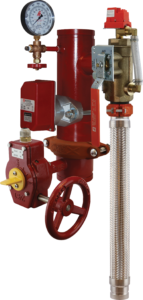
RiserPACK® assemblies integrate key fire sprinkler system components into compact configurations designed for NFPA 13, NFPA 13R, and NFPA 13D applications.

Key Takeaways

Preassembled fire sprinkler riser assemblies can:

      • Reduce field fabrication and installation time
      • Reduce the number of field connections and potential leak points
      • Create more compact and consistent sprinkler system layouts
      • Simplify access for inspection, testing, and maintenance
      • Integrate testing, draining, pressure monitoring, and other required functions
      • Reduce the number of individual components contractors need to source and assemble

Continue reading Reduce Installation Time and Labor with Preassembled Riser Manifolds →
AGF Manufacturing Introduces DRYTEST Model 5600 to Simplify Dry Sprinkler System Trip Testing

Compact valve combines essential testing functions to reduce connections, installation time, and system complexity

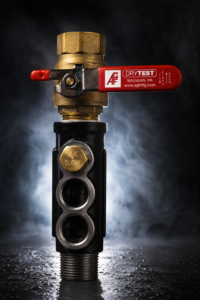
MALVERN, PA., July 21, 2026 AGF Manufacturing, a leading provider of innovative fire protection solutions, proudly announces the launch of the DRYTEST Model 5600, a compact valve designed to simplify trip testing for dry and preaction fire sprinkler systems.

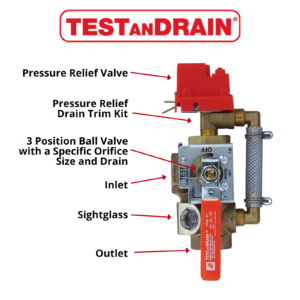
DRYTEST ValveThe DRYTEST Model 5600 combines the test connection valve and orifice manifold into a single, purpose-built assembly. By replacing a traditional arrangement of multiple components and field-installed connections, DRYTEST can help contractors shorten installation time, reduce potential leak points, and create a cleaner system layout. It also provides ITM teams with a convenient, accessible point for conducting required trip tests.
“Trip test assemblies should be straightforward to install, operate, and verify,” said Jim McHugh, President at AGF Manufacturing. “DRYTEST brings the essential functions together in one compact valve, helping contractors reduce installation complexity while giving a clear and efficient way to perform the code-required trip test.”

Continue reading AGF Manufacturing Introduces DRYTEST Model 5600 to Simplify Dry Sprinkler System Trip Testing →

Lean by Design: How AGF Products Help Fire Sprinkler Contractors Save Time

Time is one of the most valuable resources on any job site. Labor is tight, schedules are compressed, and every extra fitting, connection, material search, or avoidable service adds up. Fire sprinkler contractors need products and processes that help them work efficiently without cutting corners. That is where smart product design and lean construction thinking work together.

Lean construction is not about rushing. It is about removing waste from the work. It means reducing unnecessary steps, improving planning, limiting rework, keeping materials organized, and making sure crews have what they need when they need it. In the fire sprinkler industry, that can mean fewer parts to assemble, clearer work packages, better coordination, cleaner riser rooms, faster testing, and systems that are easier to inspect and maintain over time.

AGF products are designed for the realities of the field. They are built to reduce unnecessary parts, simplify installation, support faster testing, and make systems easier to service throughout the life of the building. From test and drain valves to auxiliary drains, inspector’s tests, air vents, and preassembled solutions, AGF helps contractors save time at every stage of the system’s life.

Continue reading Lean by Design: How AGF Products Help Fire Sprinkler Contractors Save Time →

ITM Requirements for AGF Products

Fire sprinkler systems are designed to protect lives and property when seconds matter. But even the best designed system depends on regular inspection, testing, and maintenance to remain ready for service.

That is where NFPA 25 comes in.

NFPA 25, Standard for the Inspection, Testing, and Maintenance of Water-Based Fire Protection Systems, establishes the baseline requirements for maintaining water-based fire protection systems after installation. It provides guidance for inspecting, testing, and maintaining systems and components so they continue to operate as intended.

For contractors, inspectors, facility teams, and building owners, NFPA 25 is more than a checklist. It is an ongoing service framework that helps identify issues before they become failures and helps owners meet applicable code, inspection, and documentation expectations. Most importantly, it helps ensure fire protection systems are ready when needed.

AGF products are commonly used in areas of a sprinkler system that require regular inspection, testing, and maintenance. Understanding those requirements helps contractors service systems more effectively and helps owners maintain safer, more compliant buildings.

Test and Drain Requirements

As the name suggests, TESTanDRAIN and Inspector’sTEST valves play an important role in confirming system readiness. They are used to verify waterflow alarm what is a test and drain valveoperation, support draining procedures, and help confirm that water supply performance has not degraded over time.
Main drain tests should be performed at the frequency required for the system arrangement and water supply configuration. The test valve should be in an accessible location, downstream of the waterflow alarm, and the drain should be discharged to a location that will not cause damage.

Continue reading ITM Requirements for AGF Products →

NFPA 25 in Action: Verifying System Performance Over Time

NFPA 25, Standard for the Inspection, Testing, and Maintenance of Water-Based Fire Protection Systems, establishes the minimum requirements to ensure that fire protection systems remain operational and effective over time. The standard is performance-based in its intent, requiring ongoing inspection, testing, and maintenance (ITM) to verify that system components function as designed.

A critical point emphasized within NFPA 25 is that the responsibility for compliance rests with the building owner or designated representative. The owner is responsible for ensuring that required ITM activities are performed, deficiencies are corrected, and records are maintained (NFPA 25, 2023, §4.1.1; §4.3). Contractors and inspectors perform the work, but compliance accountability remains with the owner.

Continue reading NFPA 25 in Action: Verifying System Performance Over Time →

Test Orifice Requirements in NFPA 13 and NFPA 25

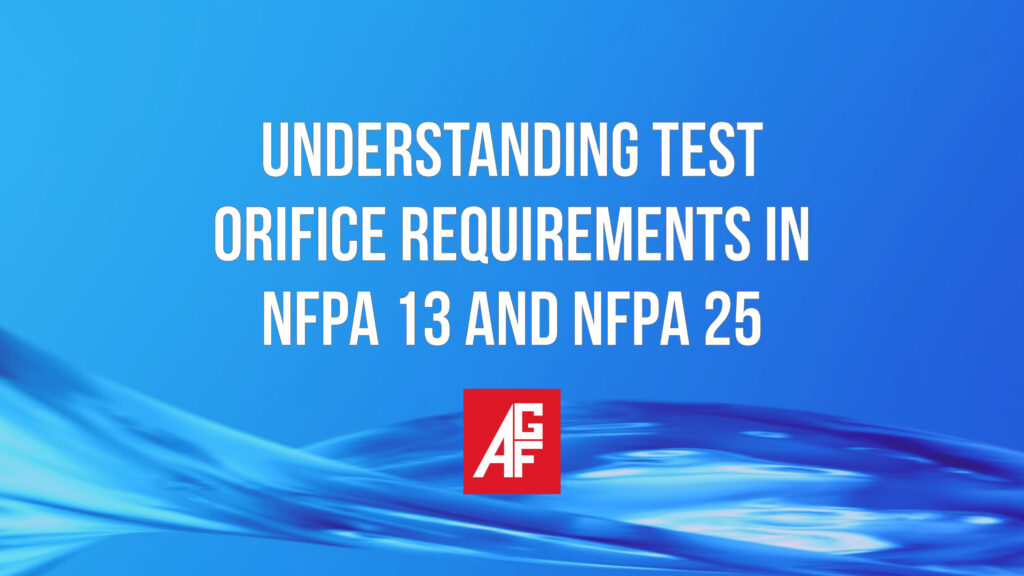
The inspector’s test valve is a vital component of any wet fire sprinkler system. At the heart of this connection is the test orifice. A small but critical feature that certifies the system’s waterflow alarm functions correctly. Both NFPA 13 (Installation of Sprinkler Systems) and NFPA 25 (Inspection, Testing, and Maintenance of Water-Based Fire Protection Systems) provide requirements that govern the size, purpose, and functionality of this orifice.

Continue reading Test Orifice Requirements in NFPA 13 and NFPA 25 →

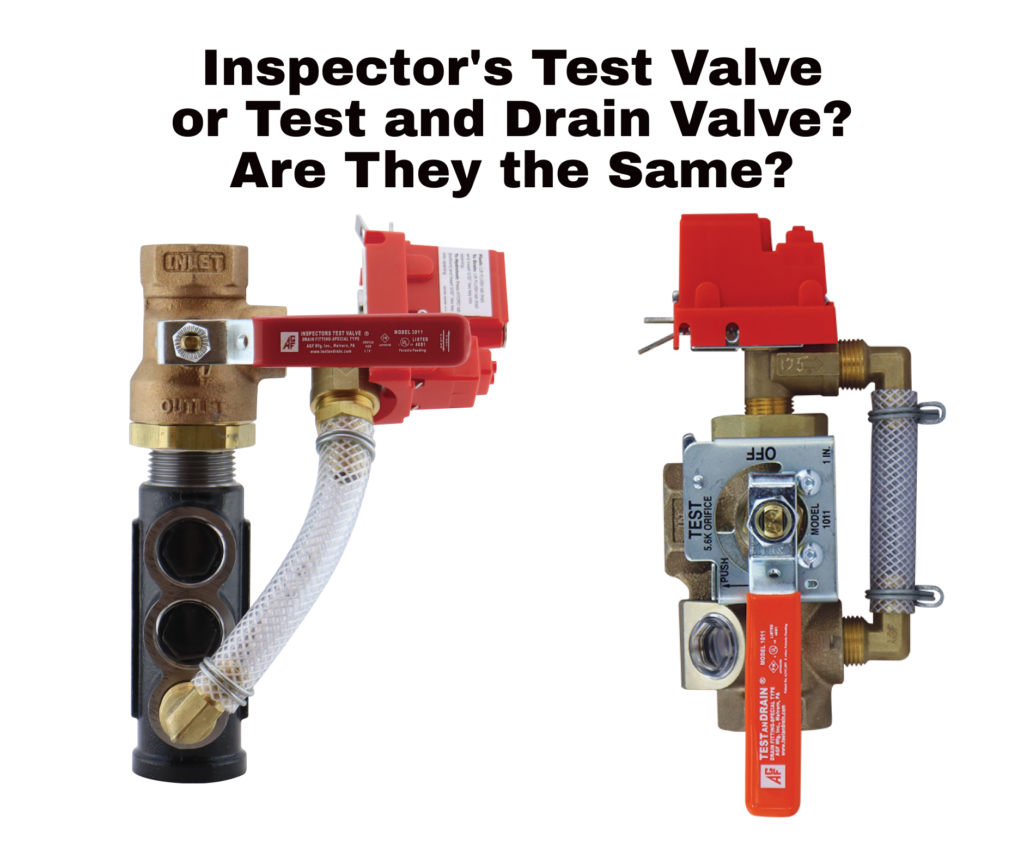
Is an Inspector’s Test the Same as a Test and Drain Valve?

Choosing and placing valves carefully is important for fire sprinkler systems

Inspectors test valve and a test and drain valve

to meet code requirements. The Inspector’s Test Valves and Test and Drain Valves are frequently confused. This is because they perform similar functions but have distinct characteristics and applications. Understanding the differences between these valves is crucial to ensure their proper usage.

Continue reading Is an Inspector’s Test the Same as a Test and Drain Valve? →

Inspecting Your Fire Sprinkler Systems

A proactive approach to extend the life of your systems.

facility personnel inspecting systems

Among the requirements needed to keep commercial fire sprinklers working and code compliant are the routine inspections, which can seem complex. Most of the Inspection, Testing and Maintenance (ITM) of sprinkler systems require a qualified life safety professional, but some of the work can be done by in-house facility personnel.

NFPA 25, the Standard for the Inspection, Testing, and Maintenance of Water-Based Fire Protection Systems is the primary standard for most facilities and this standard assign specific responsibilities to the property owner or their designated representative. The property owner is ultimately responsible for the integrity of the fire sprinkler system even if ITM is being provided by an outside contractor.

4.1.1 Responsibility for Inspection, Testing, Maintenance, and Impairment. – The property owner or designated representative shall be responsible for properly maintaining a water-based fire protection system.

Continue reading Inspecting Your Fire Sprinkler Systems →

Fire Sprinkler System Freeze Protection: How to Maintain Auxiliary Drains

Fire sprinkler system freeze prevention is vital for facility managers as temperatures drop. Compromised life safety, facility damage, and more plague facilities with poor maintenance plans.

Proper auxiliary drain maintenance is key to preventing freezing on dry sprinkler systems. Facilities can save thousands each winter with these key steps:

      1. Locate Auxiliary Drains
      2. Perform Preventative Maintenance
      3. Use Correct Service Frequency
      4. Simplify the Plan

So how do you maintain auxiliary drains, and what are they? Let’s dive in.

Continue reading Fire Sprinkler System Freeze Protection: How to Maintain Auxiliary Drains →

AGF Introduces Lockable Pressure Relief Valves to Expedite Hydrostatic Testing

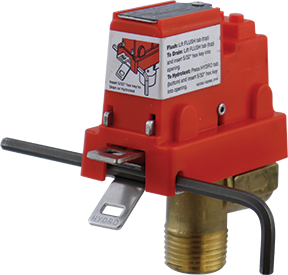
MALVERN, PA —AGF Manufacturing is excited to introduce two new lockable pressure relief valves, Model 7000L and Model 7200L specifically designed for the fire sprinkler industry. These models can be temporarily locked closed to allow for hydrostatic testing without removing the pressure relief valve from the system, saving significant time during installation. They can be ordered standalone or as part of AGF’s products that include pressure relief.

The new pressure relief valves include two metal tabs: “flush” and “hydro.” The “flush” tab can be lifted to quickly flush debris from the valve. The “hydro” tab can use the same hex wrench to temporarily lock the valve closed for hydrostatic testing with the valve installed in the system. This feature will allow a sprinkler system or a TESTanDRAIN valve with relief valve and drain trim to be completely installed prior to initial system leak testing, greatly speeding up installation.

Continue reading AGF Introduces Lockable Pressure Relief Valves to Expedite Hydrostatic Testing →